Conference on Consumer Finance Law celebrating 100 years, 1927 through 2027

Celebrating 100 Years of Education and Excellence

1927 – 2027

For a century, CCFL has brought together leading legal minds to shape laws and policies that protect consumers and strengthen the financial services industry.

Scroll to Explore Our History

The Times

Social, Economic & Technological Change

Consumer Finance

Law, Regulation & Industry Evolution

1920s
The Times
1920s

1927–1929

Mass Production & Installment Buying

Cars, radios and household appliances became part of everyday life as urbanization and installment buying transformed how Americans consumed.

A 1920s urban shopping district with automobiles, pedestrians and radios displayed for sale.
Consumer Finance
CCFL

1927

CCFL Is Founded

The Conference on Personal Finance Law, now CCFL, was formed as consumer lending expanded and personal-finance law became increasingly important.
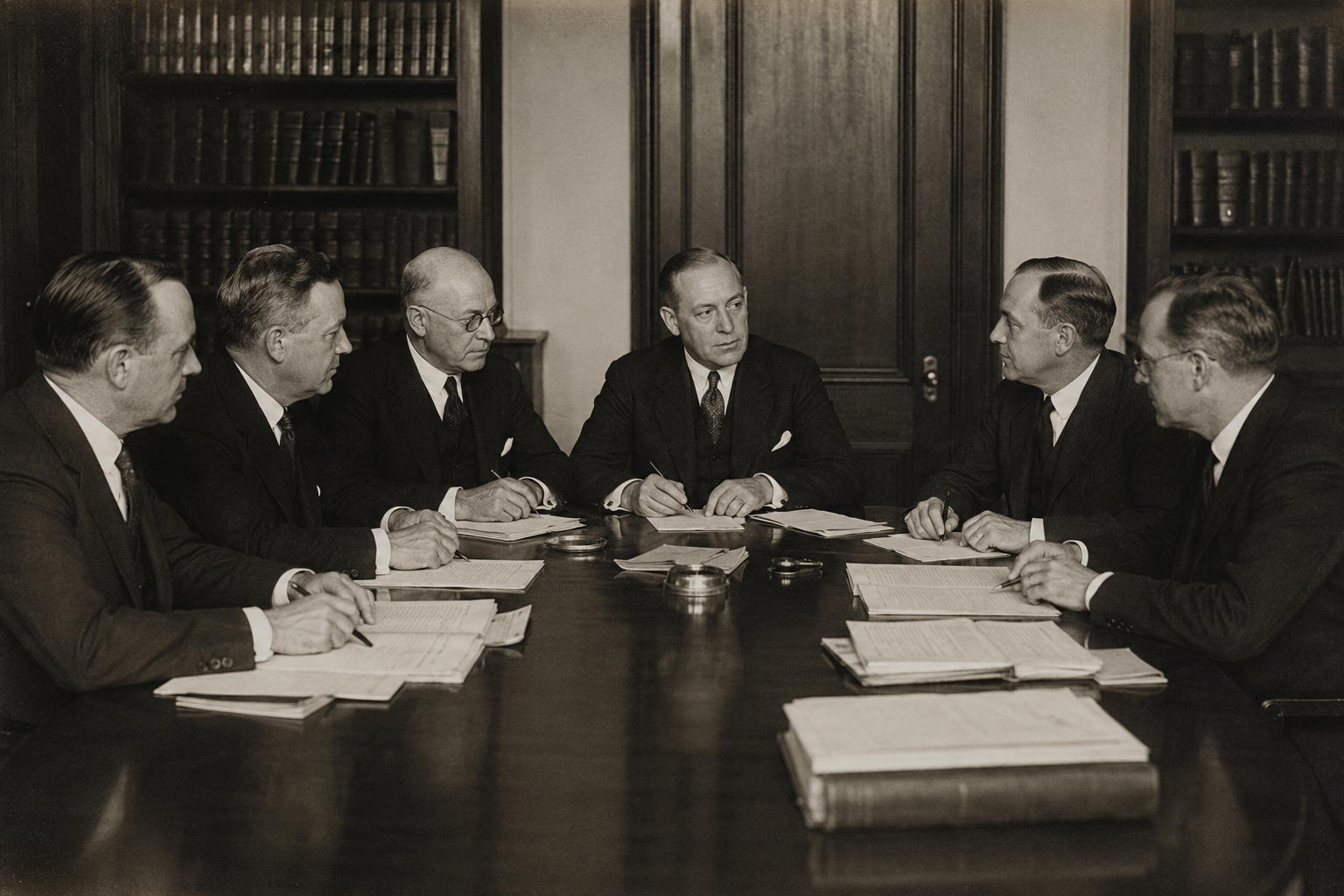
A formal 1920s meeting of legal and financial professionals.
1930s
The Times
1930s

1929–1933

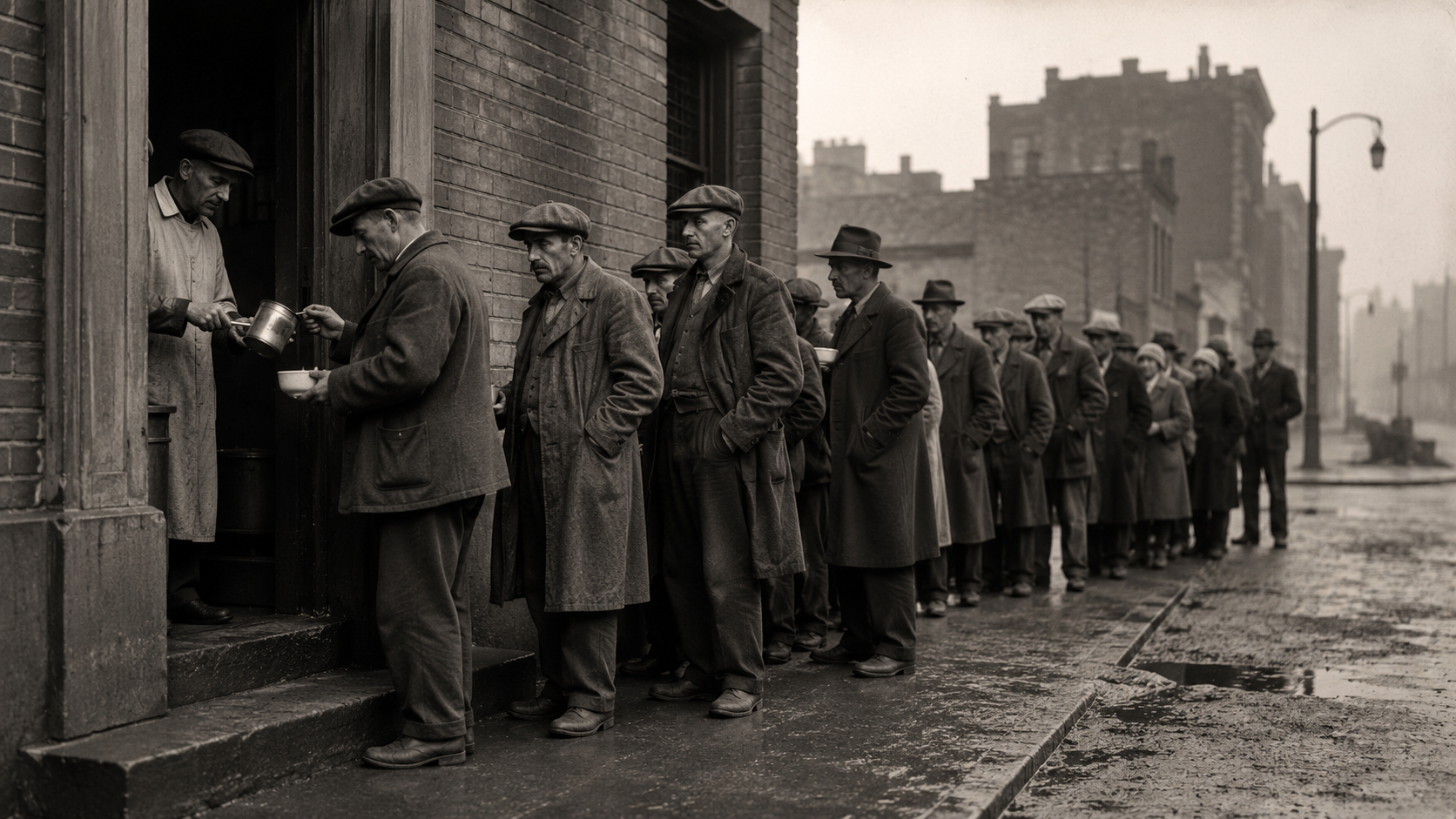
The Great Depression

The stock market crash, bank failures and widespread unemployment brought severe economic hardship to American households.

Unemployed Americans standing in a relief line during the Great Depression.
Consumer Finance
Credit

1929–1933

Credit Availability Contracts

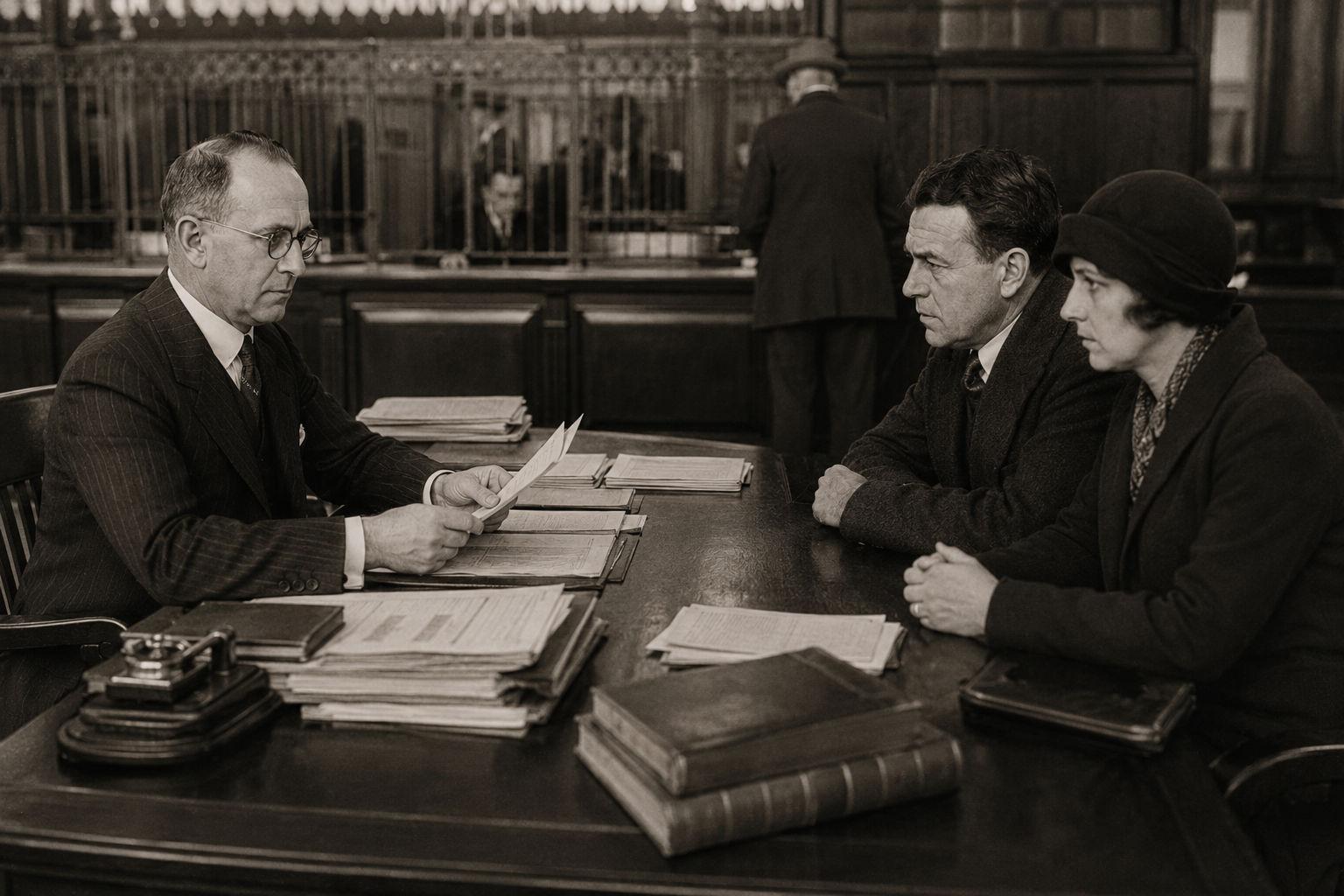
Bank failures and economic uncertainty sharply reduced credit availability, revealing how closely household finance depended on a stable lending system.

A bank officer discussing limited credit with a worried couple during the Great Depression.
1940s
The Times
1940s

1933–1945

New Deal & Wartime Mobilization

New Deal programs sought to restore confidence, while World War II brought full employment and large-scale economic mobilization.

American workers building public infrastructure and working in wartime factories.
Consumer Finance
Stability

1933–1945

A More Stable Financial System

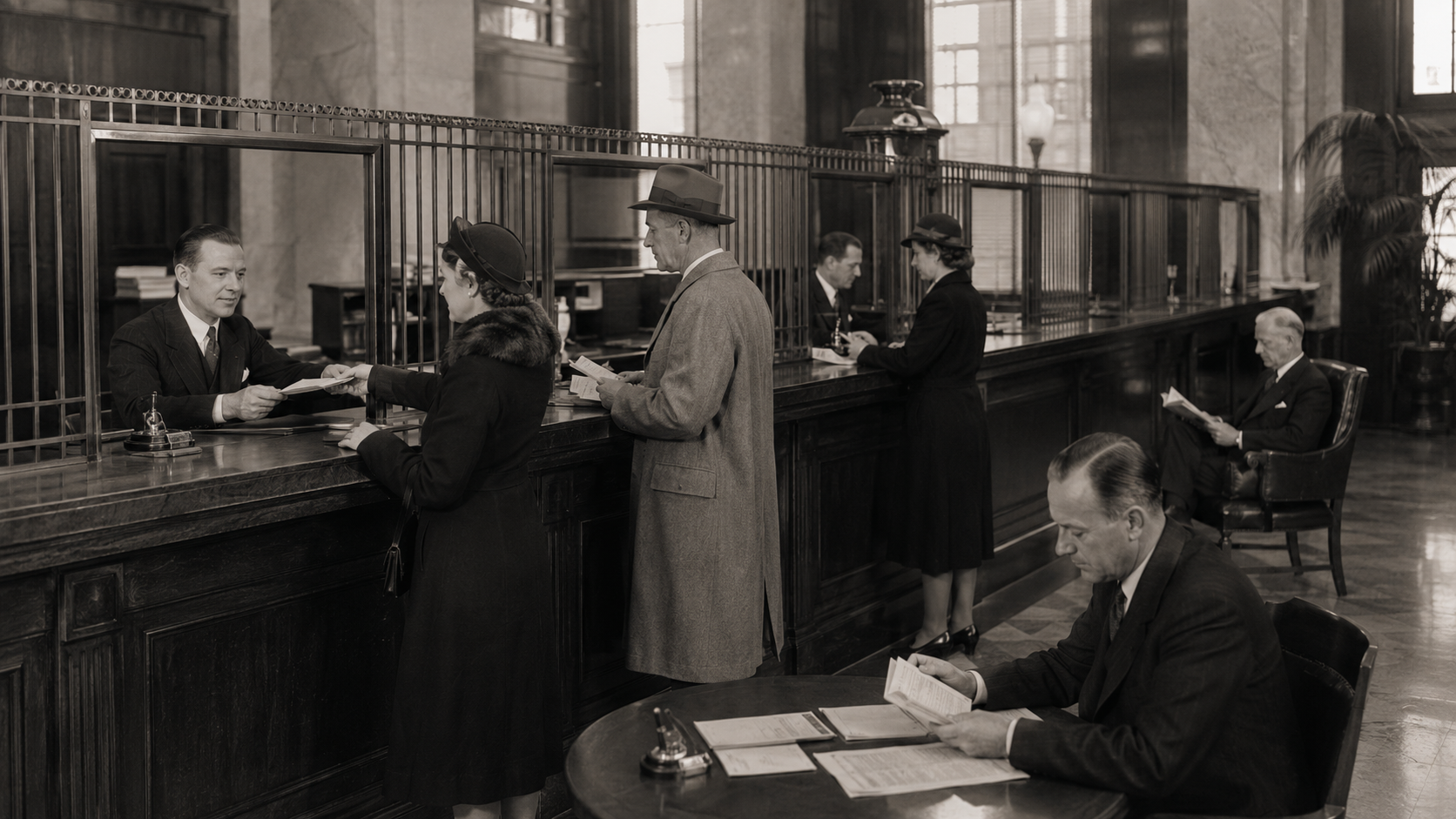
Deposit insurance and banking reforms restored confidence and helped create the foundation for postwar household borrowing.

Customers conducting routine transactions in a restored and stable bank.
1950s
The Times
1950s

1946–1959

Postwar Prosperity

Rising incomes, suburban growth, automobile ownership and a growing middle class reshaped American life.

A postwar suburban neighborhood with families, new homes and automobiles.
Consumer Finance
Growth

1946–1959

Mass-Market Consumer Credit

Auto loans, installment contracts and revolving credit expanded. CCFL’s Consumer Finance Law Quarterly Report began publication in 1946.

A postwar couple arranging automobile financing through an installment payment plan.
1960s
The Times
1960s

1960–1969

Civil Rights & Consumer Activism

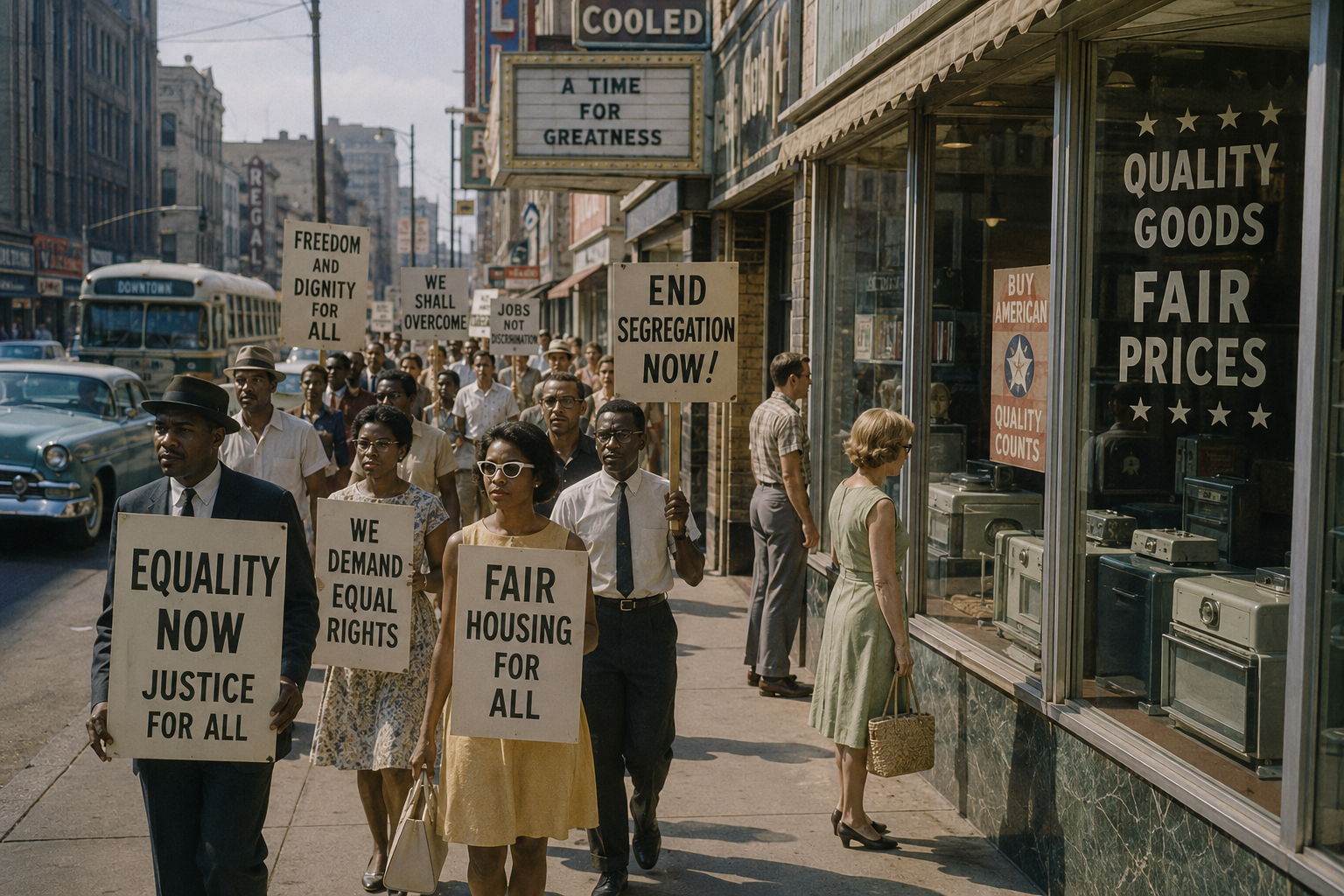
The civil-rights movement and rising expectations of fairness helped create a broader culture of consumer protection.

A civil-rights march through an American commercial district during the 1960s.
Consumer Finance
TILA

1968

The Truth in Lending Act

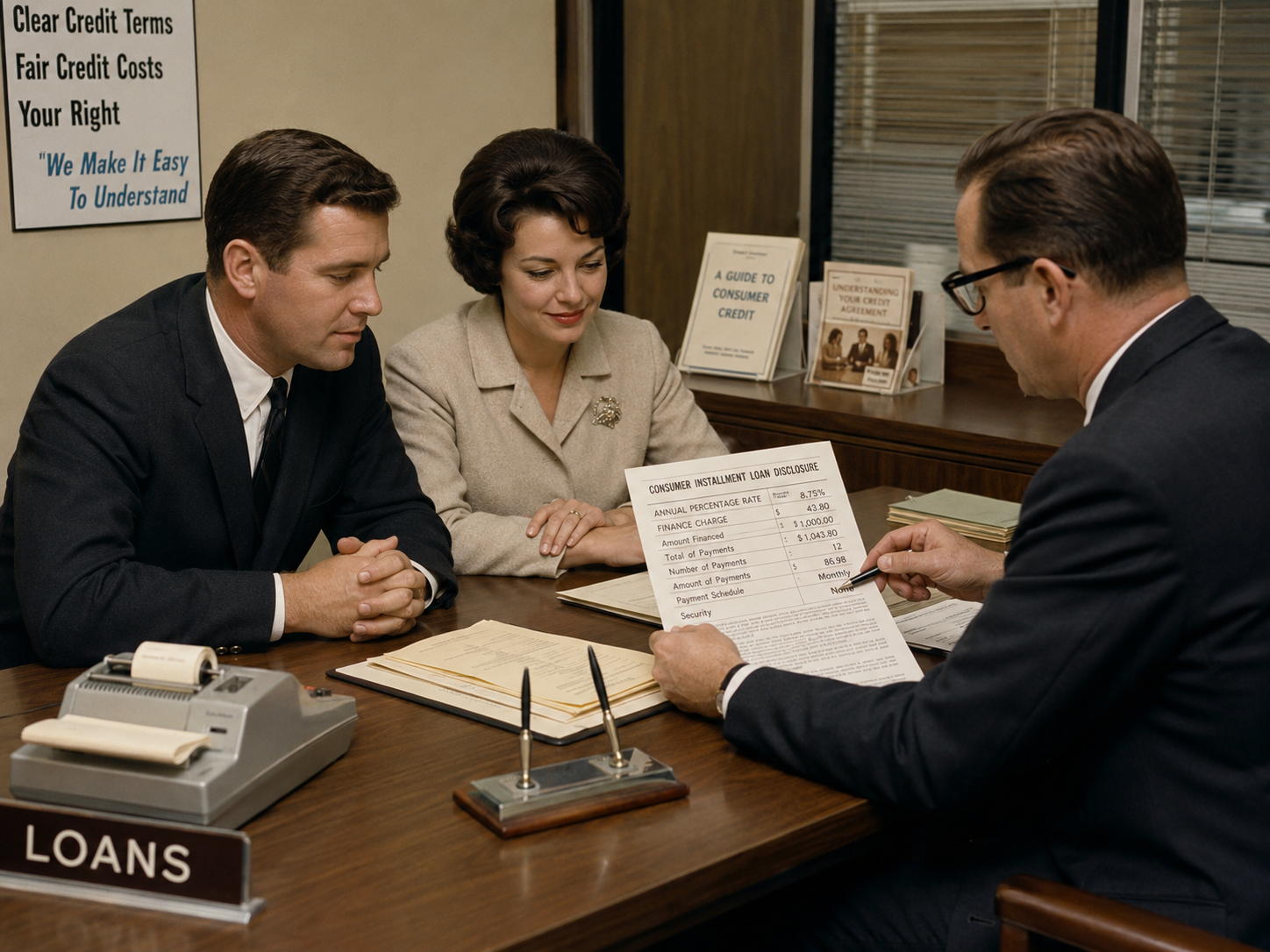
TILA required clearer, standardized disclosure of credit costs and annual percentage rates, moving consumer protection toward greater transparency.

A lender explaining a standardized loan disclosure and annual percentage rate to consumers.
1970s
The Times
1970s

1970–1979

Fairness, Privacy & Equal Access

Women’s rights, anti-discrimination reforms and concerns about the use of personal data changed expectations for financial institutions.

A diverse group of women and financial professionals outside a community bank in the 1970s.
Consumer Finance
Rights

1970–1977

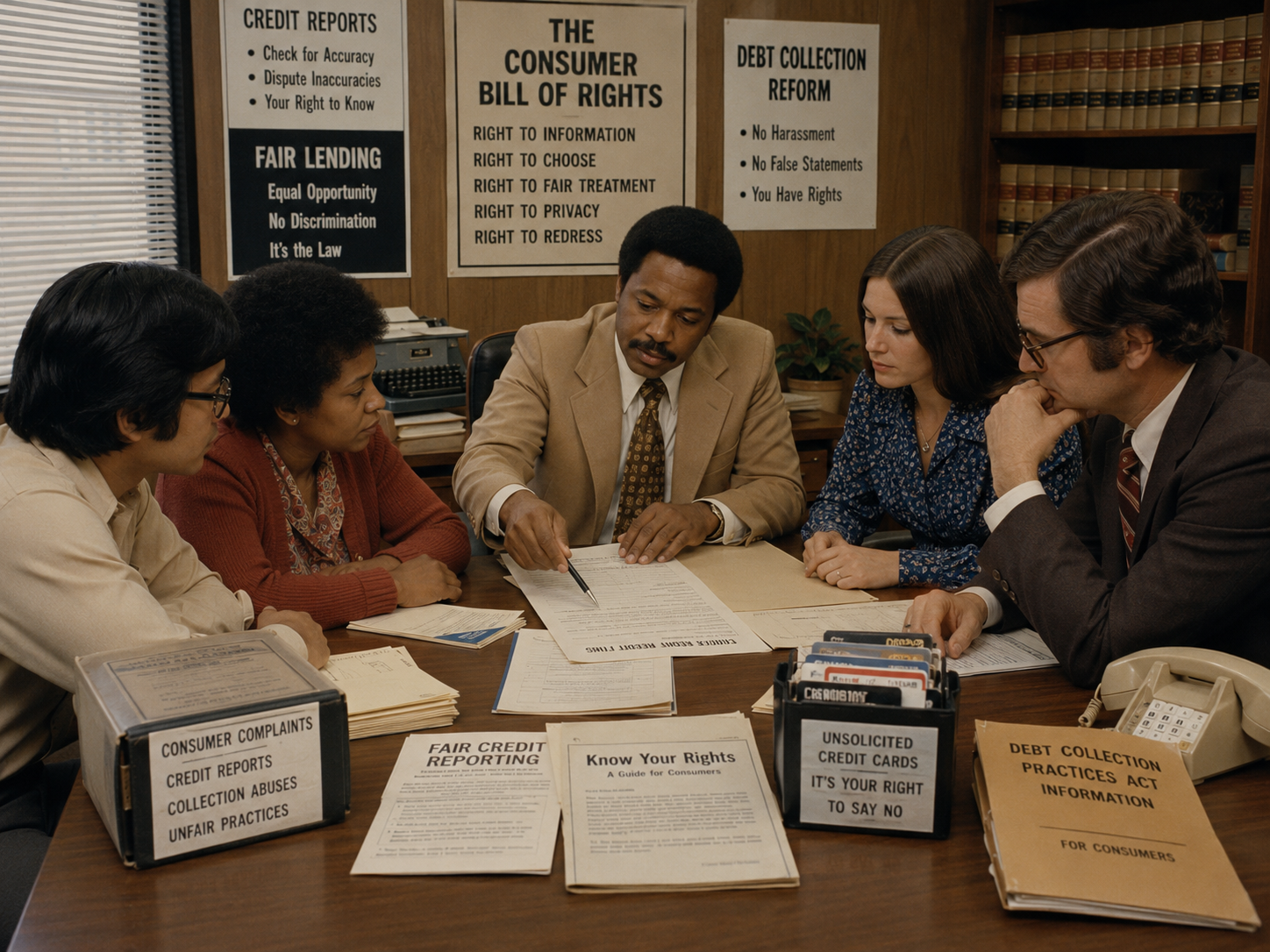
A New Protection Framework

New laws addressed credit reporting, discrimination, unsolicited cards and abusive debt collection, extending protection beyond disclosure alone.

Consumer advocates reviewing fair-credit reporting, equal-access and debt-collection protections.
1980s
The Times
1980s

1980–1989

Deregulation & Credit-Driven Growth

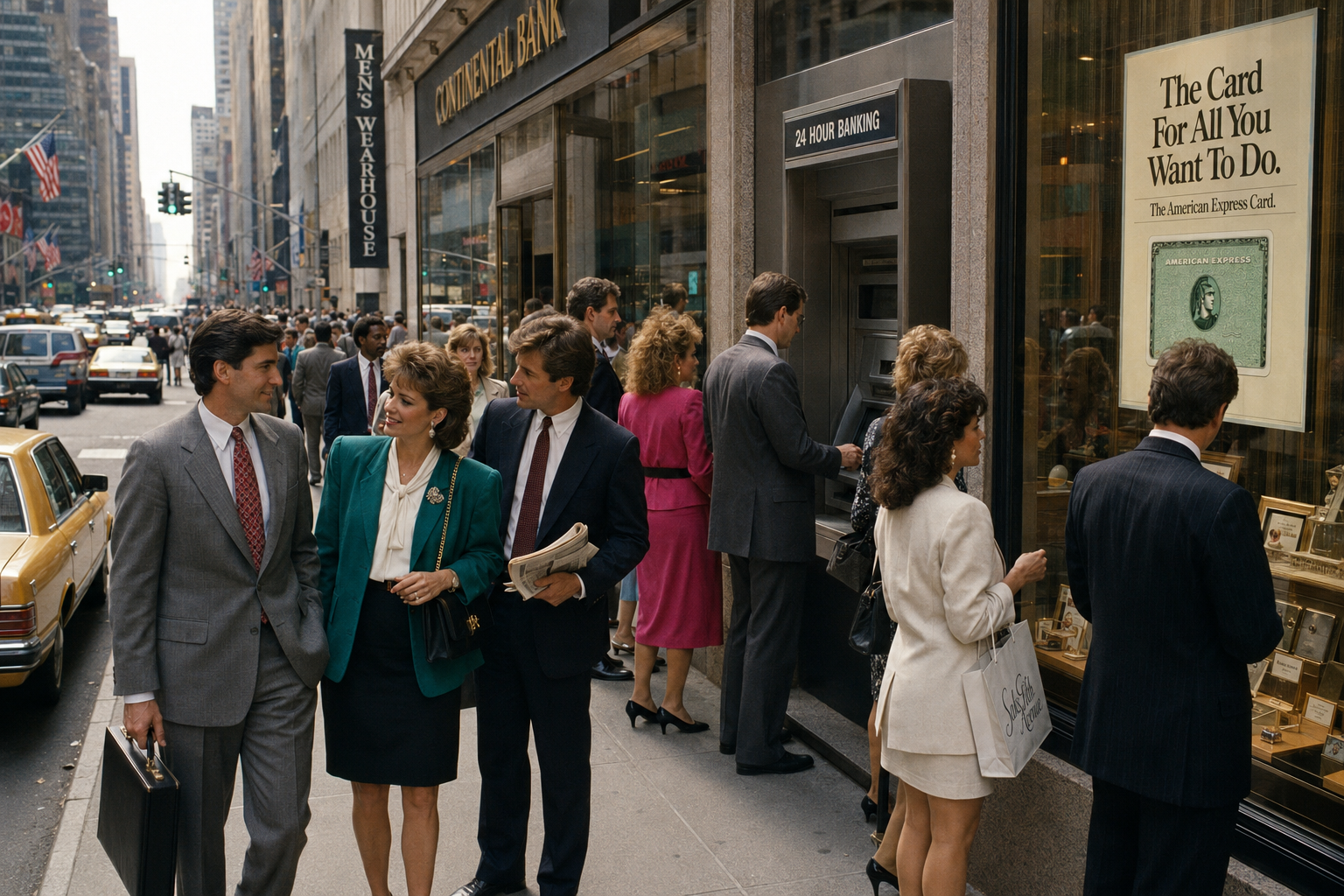
Financial deregulation, expanding consumer choice and the rapid growth of credit cards helped create an increasingly credit-driven economy.

A busy 1980s financial district with banks, ATMs, shoppers and business professionals.
Consumer Finance
Cards

1980–1989

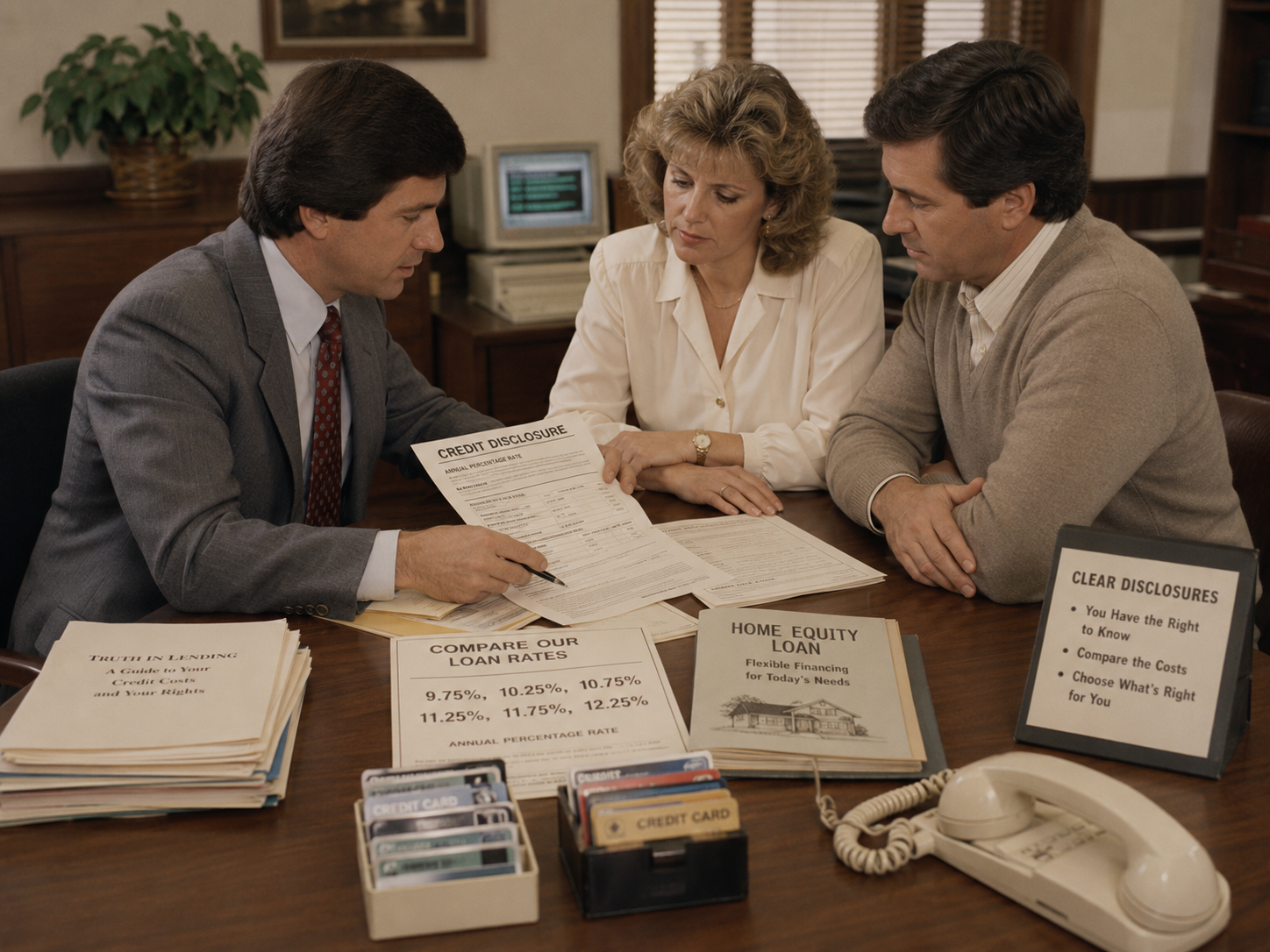
Modernizing Credit Disclosures

Federal reforms simplified lending disclosures and added protections for credit cards, charge cards and home-equity lending.

A financial professional explaining credit-card and home-equity disclosures to consumers.
1990s
The Times
1990s

1990–1999

The Information Economy

Personal computers, the commercial internet and data-driven marketing transformed communication, commerce and consumer decision-making.

Consumers and office workers using personal computers and early online shopping services during the 1990s.
Consumer Finance
Data

1990–1999

Scoring, Home Equity & Risk

Credit became more data-driven as scoring, product segmentation and home-equity lending expanded. HOEPA added protections for high-cost mortgages.

A lender reviewing credit scores, risk charts and home-equity options with consumers.
2000s
The Times
2000s

2000–2007

Housing Boom & Digital Commerce

Low interest rates, rising home prices and expanding internet use encouraged borrowing and changed how consumers shopped for financial products.

A family shopping for a suburban home while reviewing online mortgage rates and digital financial products.
Consumer Finance
Online

2000–2007

Online Lending Takes Hold

Electronic signatures, online marketing and digital processing accelerated lending, while increasingly complex products and weaker underwriting increased risk.

An early-2000s office worker completing an online lending application on a desktop computer.
2008
The Times
2008

2008–2010

Financial Crisis & Recession

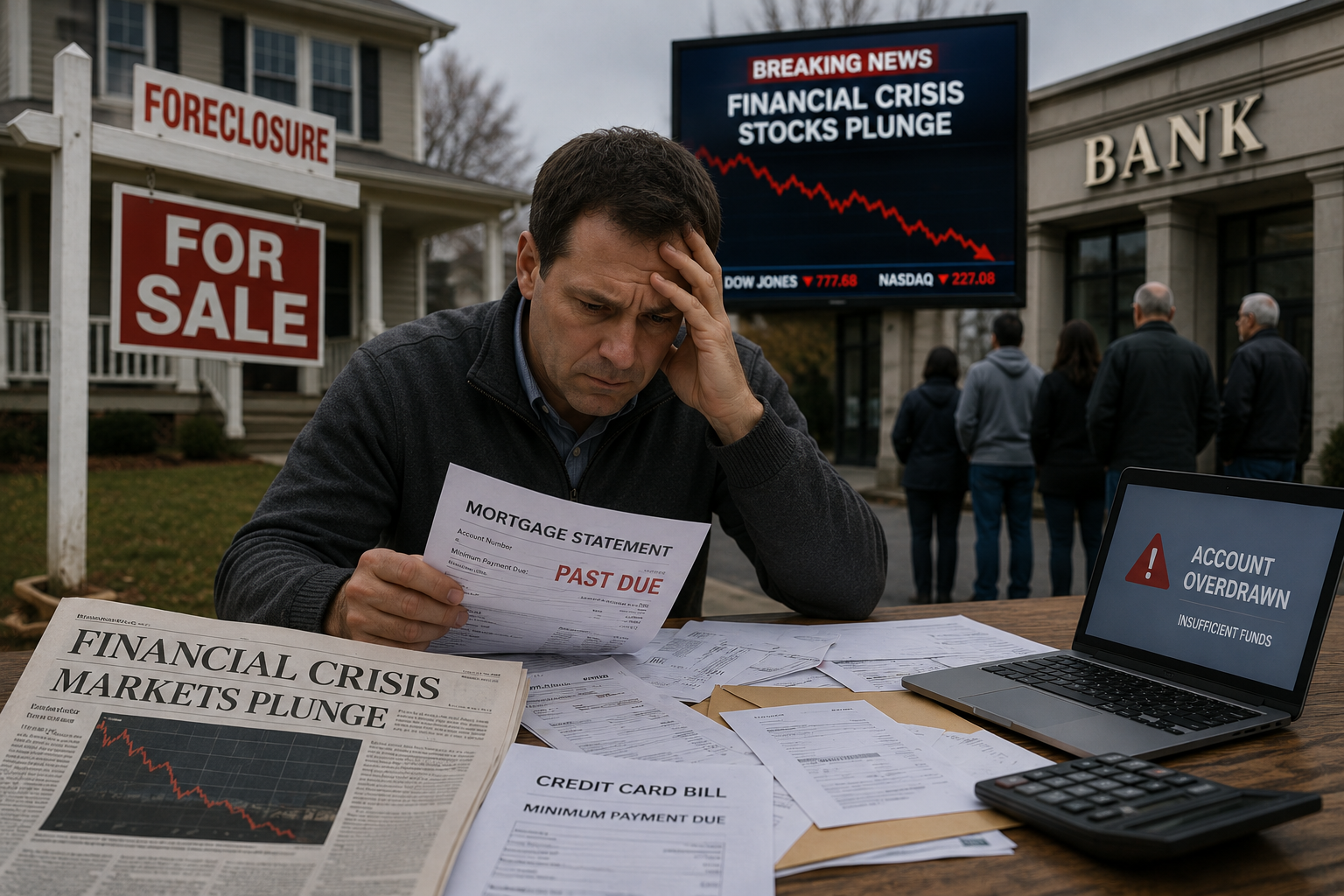
The collapse of the housing market shook confidence in financial institutions and exposed the risks of household leverage and complex lending products.

A homeowner facing foreclosure, overdue mortgage bills and falling financial markets during the 2008 crisis.
Consumer Finance
Reform

2009–2010

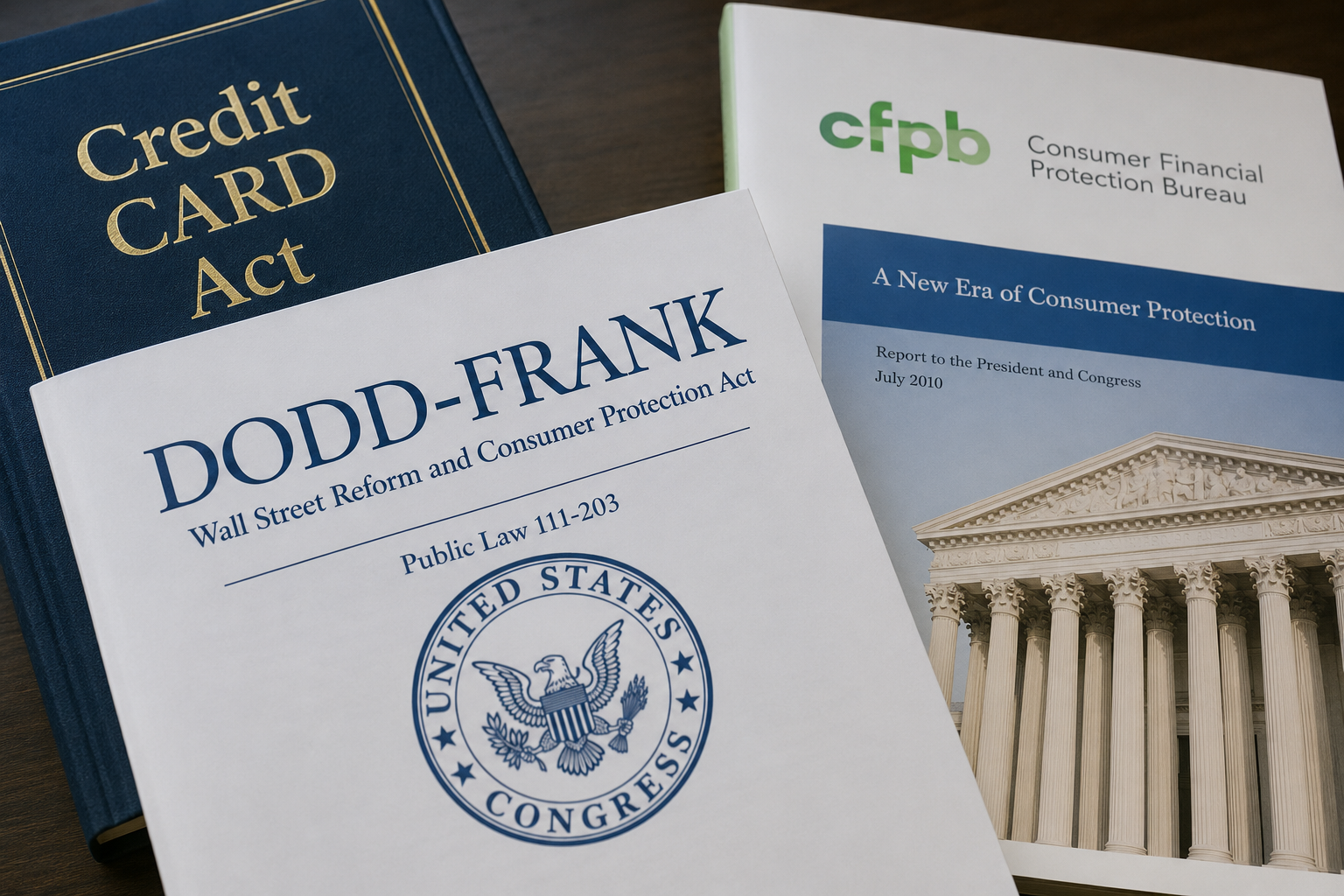
CARD Act, Dodd-Frank & CFPB

Major reforms changed credit-card practices and reorganized federal consumer-finance oversight, including creation of the CFPB.

Printed materials representing the CARD Act, Dodd-Frank and the creation of the CFPB.
2010s
The Times
2010s

2011–2019

Smartphones & Platform Commerce

Smartphones, mobile apps, algorithmic decisions and platform-based commerce reshaped how consumers communicated, purchased and borrowed.

Consumers using smartphones for shopping, mobile payments, transportation, lending and package delivery.
Consumer Finance
Fintech

2011–2019

Consumer Finance Goes Digital

Digital applications, integrated mortgage disclosures, marketplace lending and fintech products moved consumer finance toward digital-first delivery.

A mobile personal-loan application and online loan-comparison platform representing digital-first finance.
2020
The Times
2020

2020–2022

Pandemic & Rapid Digitization

COVID-19 accelerated remote work, e-commerce and reliance on digital financial channels while increasing concern about household vulnerability.

A home office during the COVID-19 pandemic with remote work, digital banking, online shopping and household bills.
Consumer Finance
Relief

2020–2022

Forbearance, Servicing & Fraud

Loan forbearance, flexible servicing, digital origination and fraud prevention became central consumer-finance concerns.

A borrower reviewing mortgage forbearance options through a secure digital loan-servicing appointment.
2027
The Times
AI

2023–2027

AI, Data & Household Pressure

Generative AI, data-governance debates, inflation and pressure from household fees define the current social and economic environment.

A modern data center illustrating artificial intelligence, data security, digital finance and consumer analytics.
Consumer Finance
Future

2023–2027

Embedded Finance & AI Oversight

AI-assisted underwriting, embedded payments, privacy, data use, fees and algorithmic fairness are shaping the next era of consumer-finance law.

A modern workspace showing AI-assisted underwriting, embedded payments and algorithmic-fairness review.

1927–2027

One century. Countless conversations. A lasting impact.

Conference on Consumer Finance Law celebrating 100 years, 1927 through 2027

1927–2027

100 Years

Celebrating 100 Years of Education and Excellence

For 100 years, CCFL has brought together leaders, scholars and practitioners to shape a stronger and fairer financial future.

Thank you for being part of the journey.

Honoring Our Past.
Shaping Our Future.

As we celebrate 100 years, we remain committed to advancing consumer finance law for a stronger, fairer tomorrow.

Become a Member